UI / UX Design
2024
Introduced a new marketplace experience inside a banking app to centralize financial product discovery and enable users to explore offers such as loans, cards, and partner services in a structured way.
Role:
UX UI Designer
Timeline :
2–4 Months
Platform :
Mobile App
Overview & Context
Why this marketplace was introduced
The banking app focused on core financial services with no dedicated space for exploring additional products, limiting visibility of loans, cards, and partner offers.
A new marketplace experience was introduced to centralize discovery and provide a more structured way to explore financial products within the app.
🏛
Client
Banking Institution / Financial Services App
👥
Audience
Existing Bank Customers
📱
Platforms
Mobile App (iOS & Android)
⚙️
My Scope
Research → UX Design → Interaction Design → Prototyping
Problems & Goals
Three pain points driving the feature
01
No centralized product discovery
Financial products were not grouped in one place, making them hard to explore.
02
Low visibility of financial offerings
Loans, cards, and partner services had limited exposure within the app.
03
Lack of structured exploration
Users had no guided way to compare or understand available financial products.
Design goals we committed to
Introduce a centralized marketplace experience
Improve visibility of financial products and offers
Enable structured product discovery
Simplify exploration of banking services
Support better engagement with financial offerings
Maintain trust and clarity within a banking context
Marketplace Structure
How the experience was designed
The marketplace was structured to help users easily discover and explore financial products through clear categorization, search, and filtering. It guides users from browsing to detailed product understanding and action in a simple, linear flow.
A
B
C
D
E
Discovery
Browse financial products by category (loans, cards, savings, offers)
Search & Filtering
Find products based on user needs and eligibility
Product Listing
View and compare available financial products
Product Details
Understand benefits, requirements, and conditions
Action Entry
Start application or request activation
Lo-fi Exploration
Validating the marketplace concept
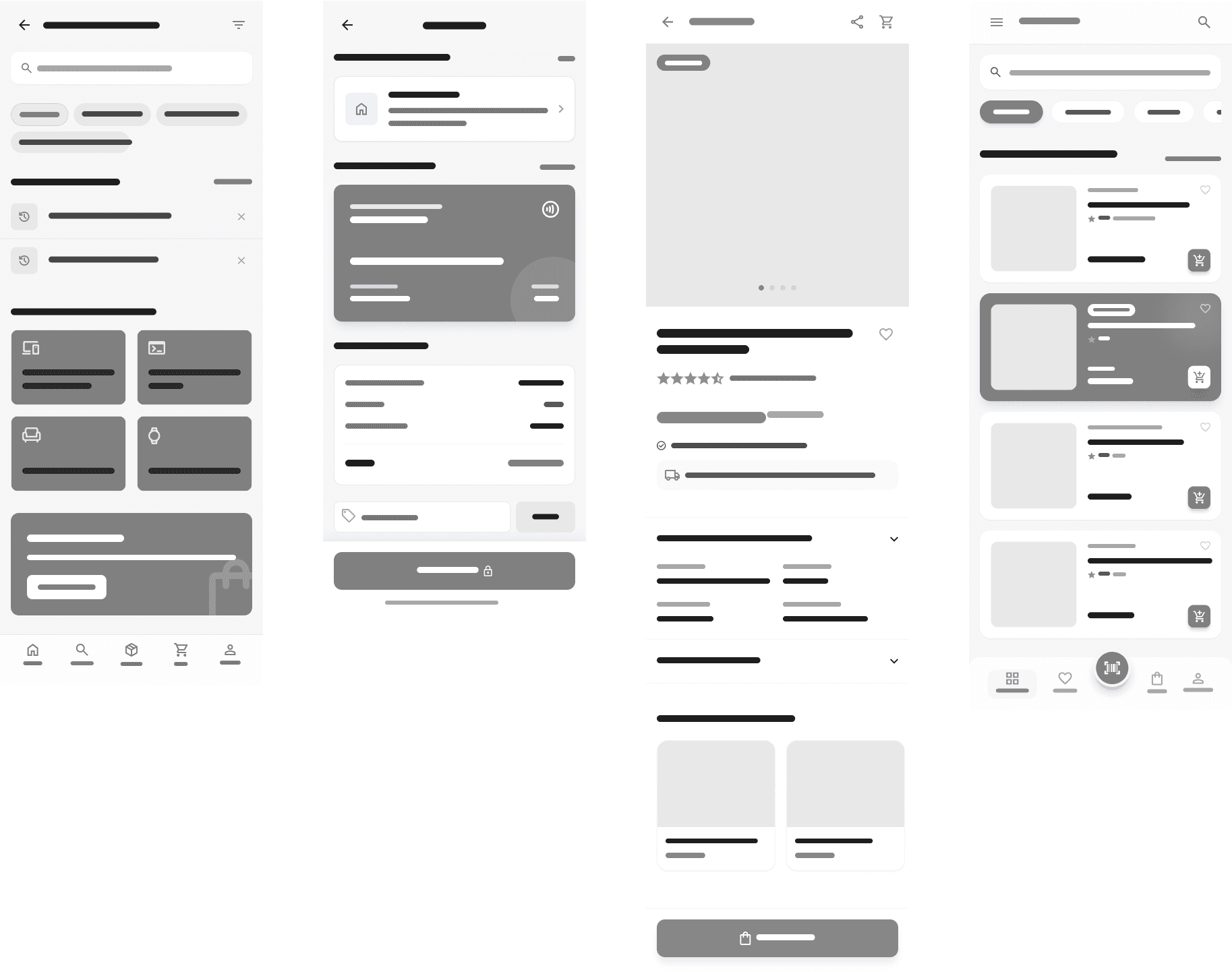
Created early low-fidelity flows to define how users would discover and navigate financial products within a new marketplace experience. Focus was on structuring categories, simplifying navigation, and ensuring clarity between similar financial offerings.

Final UI
High-fidelity Marketplace experience
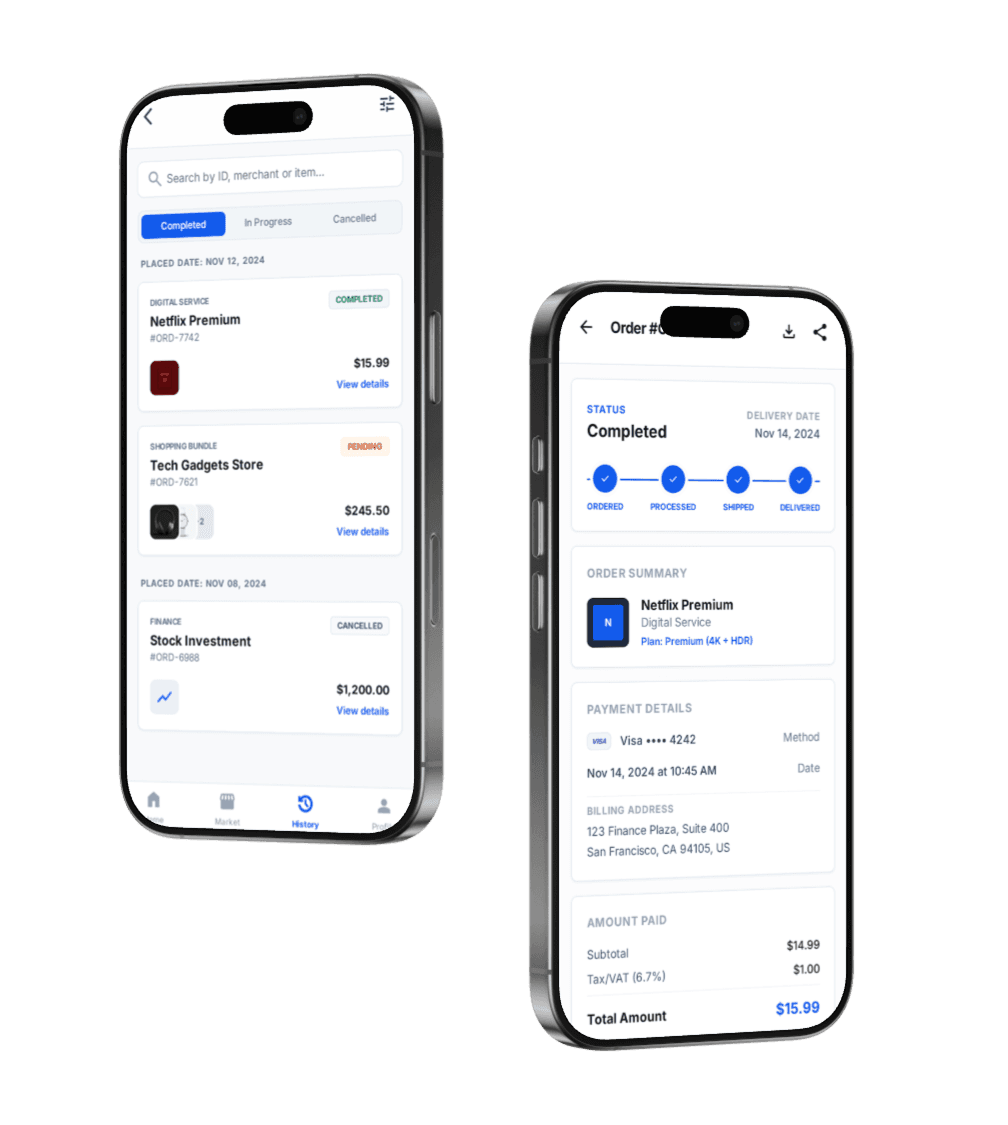
Designed a structured marketplace experience integrated into the banking app, enabling users to explore, compare, and act on financial products through a centralized and guided interface.


Key Decisions
Design Rationale
Product Discovery Model
No marketplace → Centralized discovery hub
Financial products were previously not grouped in one place, making discovery difficult.
BEFORE
No dedicated product discovery experience
AFTER
Centralized marketplace with categorized offerings
Product Comparison
No comparison tools → Structured evaluation
Users lacked a clear way to understand differences between financial products.
BEFORE
No structured comparison experience
AFTER
Organized product listing and comparison flow
Navigation Approach
Hidden services → Marketplace entry point
Financial services were previously scattered across the app.
BEFORE
Fragmented access to financial products
AFTER
Dedicated marketplace entry within the app
Learnings & Reflection
What I took away from this project
Introducing a marketplace inside a banking app highlighted the importance of balancing product discovery with trust, clarity, and compliance. Unlike typical e-commerce experiences, financial products require more structured presentation and careful framing.
01
Discovery must be structured in banking contexts
Users need clear categorization when exploring financial products.
02
Visibility drives engagement
Centralizing offerings significantly improves awareness of available services.
03
Trust shapes interaction design
In financial products, clarity and transparency are more important than exploration-driven UX patterns.